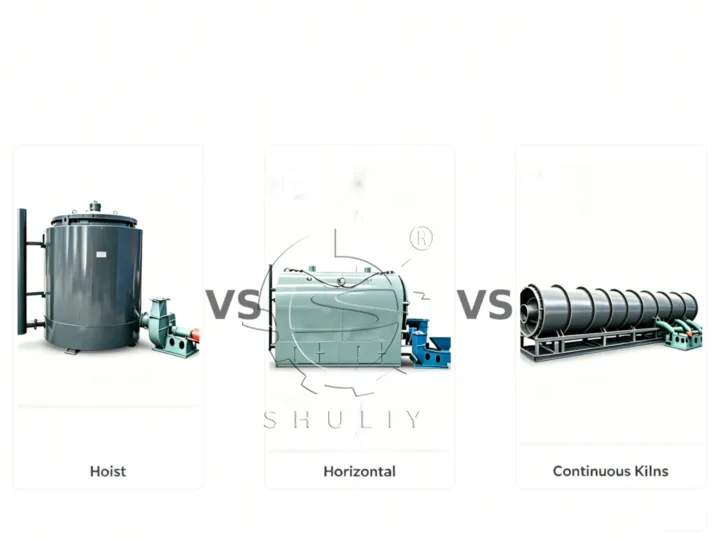
Carbonization Furnace Comparison: Hoist vs Horizontal vs Continuous Kilns
Índice
Every charcoal producer eventually faces the same question: should the carbonization step run as batches in a vertical or horizontal kiln, or as one continuous line? The answer is decided by two facts before any budget talk — what your raw material looks like, and how many kilograms of charcoal you must output per day.
At Shuliy, our three furnace families cover the full range:
- A hoist (vertical) carbonization furnace that turns a batch of logs into lump charcoal in 4–10 hours.
- A forno de carbonização horizontal that processes 900–3,000 kg per 12–14-hour charge.
- A forno a carvão contínuo that carbonizes small particles in a 20–25 minute cycle at 400–1,500 kg per hour.
This comparison lays out the real numbers so you can match the kiln to your material and scale — not the other way around.
| Your situation | Recommended furnace |
|---|---|
| Logs, branches, bamboo or whole coconut shells; 1–3 t/day | Hoist (vertical) furnace |
| Nut shells, bamboo, firewood in bulk; 1–3 t/day, easier loading | Horizontal furnace |
| Rice husks, sawdust, palm shells and other small, dry feedstock; 3 t+/day | Continuous furnace |
| Sawdust briquettes that will be carbonized for BBQ charcoal sticks | Hoist furnace (briquettes first, then char) |
How the Three Furnace Designs Work
Hoist (vertical) carbonization furnace: crane-loaded batch kiln
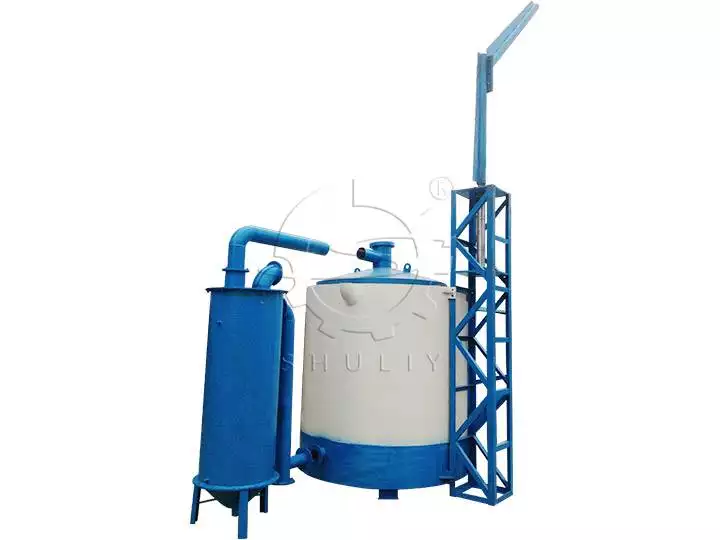
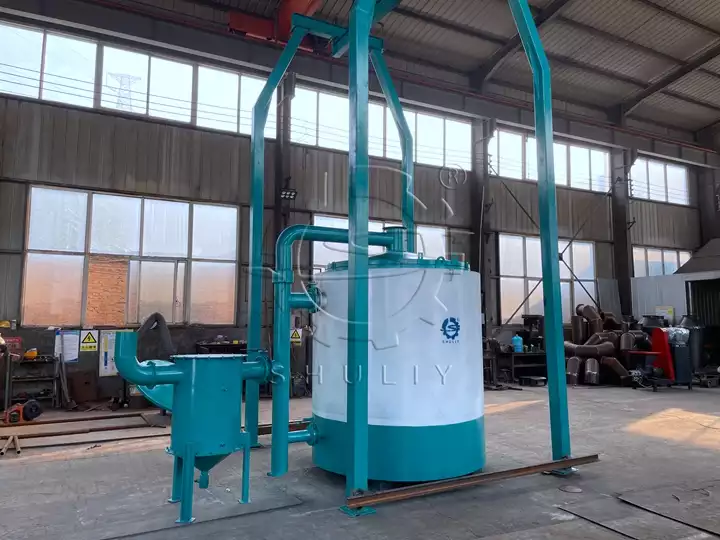
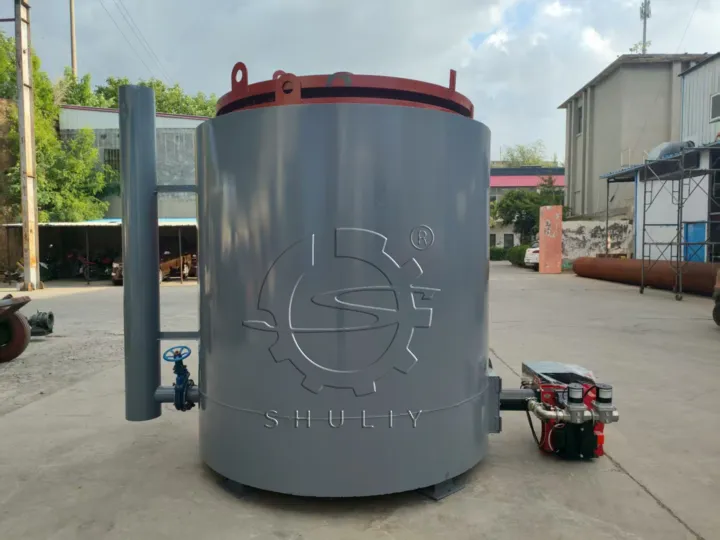
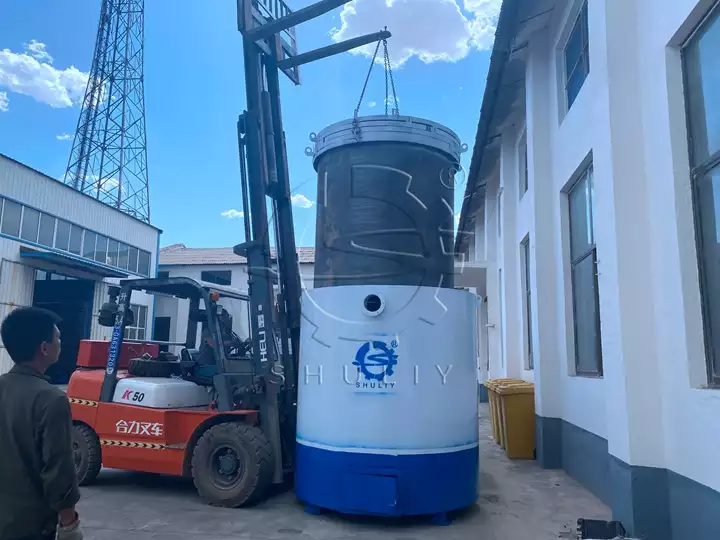
The hoist furnace is an upright steel kiln with one or two carbonization chambers and an external crane.
Feedstock is packed into cages, hoisted into the chamber, and carbonized as a single batch.
Hot flue gas circulates the chamber, and once the process passes roughly 280 °C, the combustible gas the charge releases is piped back and burned as its own heat source, so later hours cost very little fuel.
Chamber liners run 1.0–1.5 m in internal diameter (SL-1000 / SL-1300 / SL-1500), each 1.5 m tall, which is why full logs and bamboo fit inside.
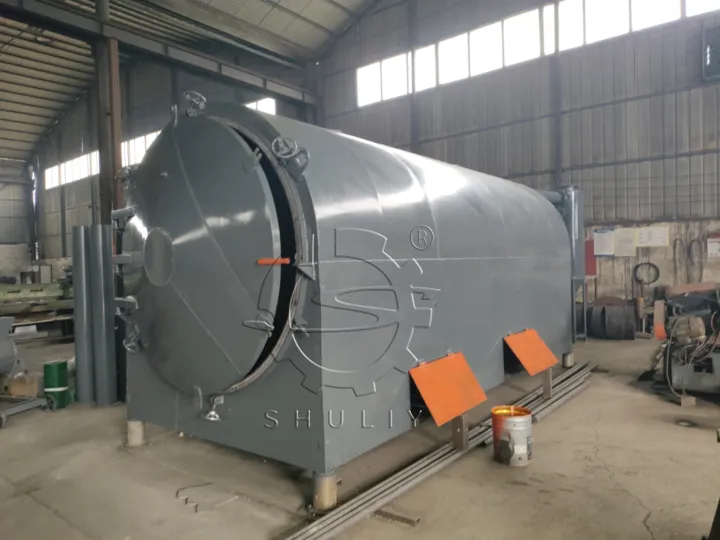
Horizontal carbonization furnace: jacketed batch oven on its side
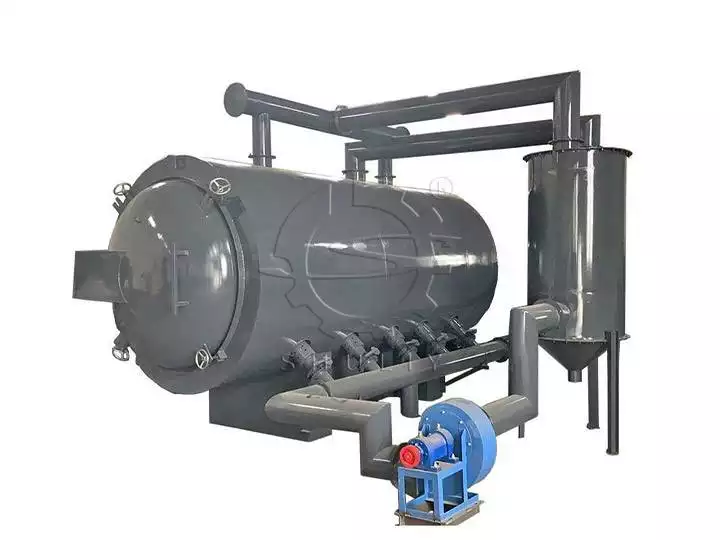
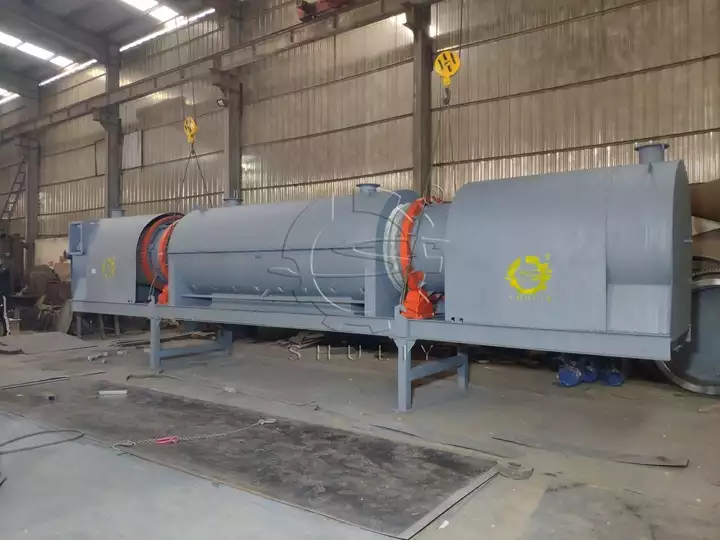
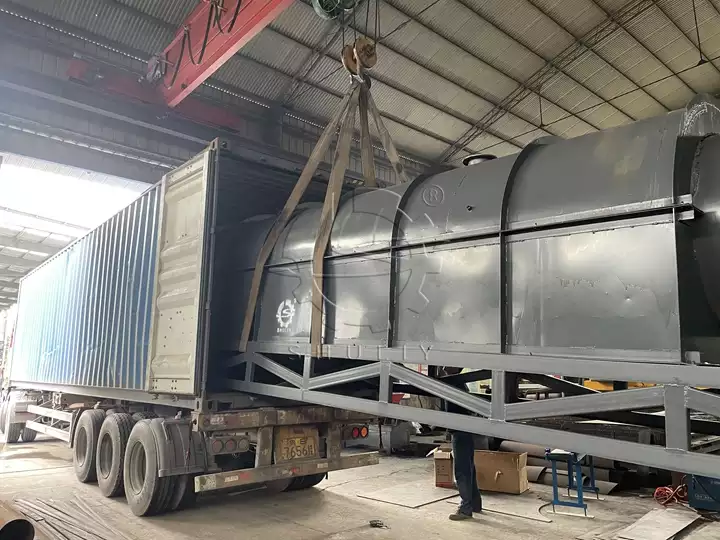
The horizontal furnace uses the same batch chemistry inside a lying-down, jacket-insulated drum with an external burner.
Loading cages slide in and out at ground level, which removes the crane and the lifting work — an advantage on sites with low ceilings or few workers.
One batch takes 12–14 hours: SL-1300 carbonizes 900–1,200 kg, SL-1500 takes 1,500–2,000 kg, and SL-1900 handles 2,500–3,000 kg of wood, bamboo, coconut shells, peanut shells or fruit pits per charge.
Continuous carbonization furnace: small particles flow through hot tubes
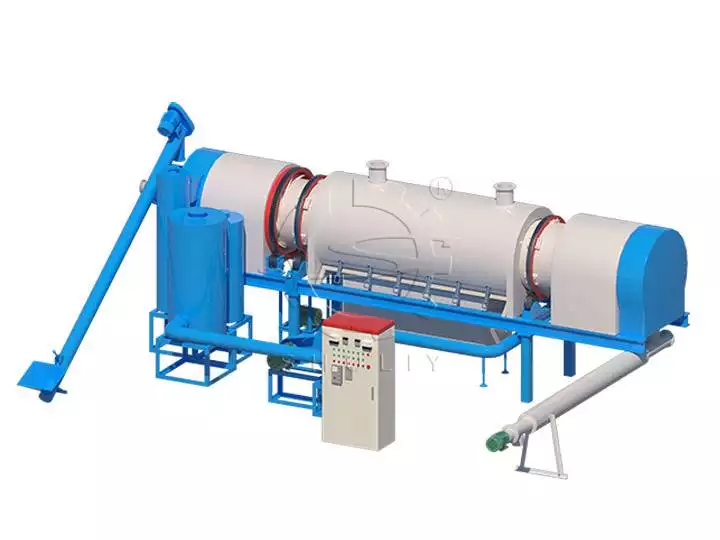
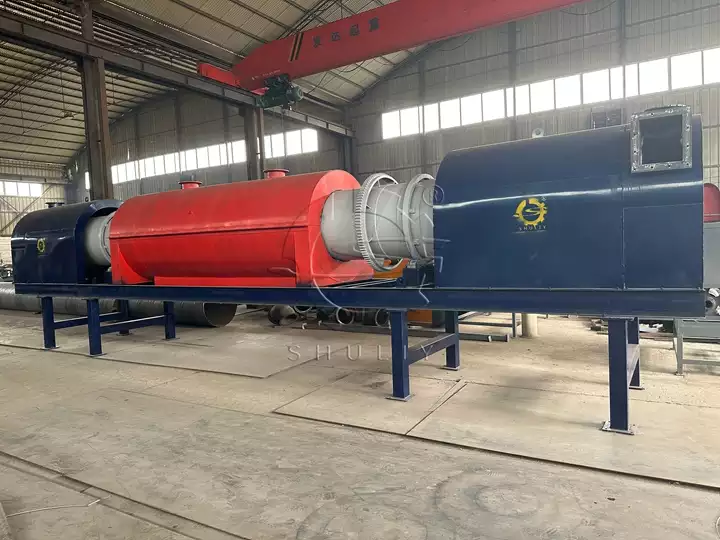
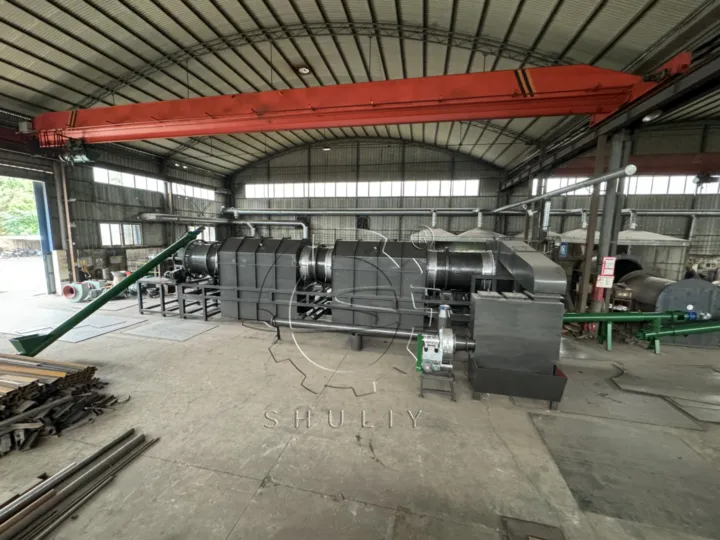
A continuous furnace is a drying-and-carbonizing pipeline: feedstock enters a sealed drying tube, drops into the carbonization reactor at 500–800 °C, and exits as biochar roughly 20–25 minutes later while fresh material keeps going in above it.
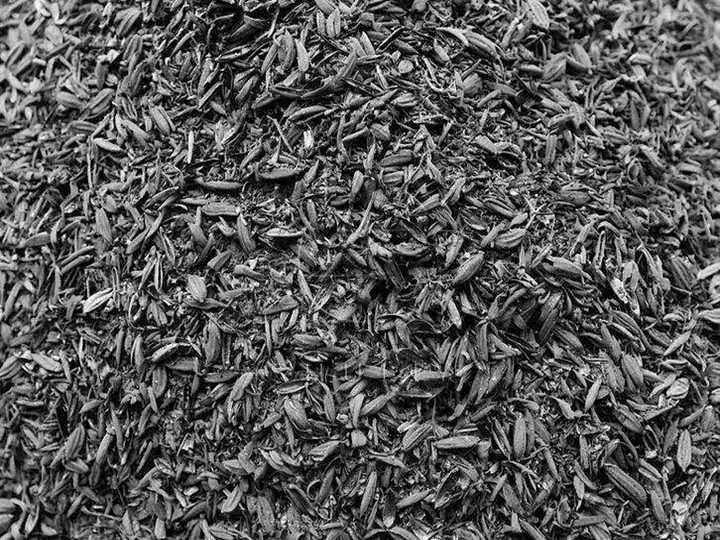
Models SL-800, SL-1000 and SL-1200 output 400–600, 800–1,000 and 1,200–1,500 kg of charcoal per hour. The trade-off is strict feed rules: pieces must stay under 10 cm and moisture under 20 %, which suits rice husks, sawdust, peanut and palm shells, corn cobs and bagasse — but not whole logs. Gas and tar are scrubbed through water-spray and filtration systems, and wood vinegar and tar can be collected as byproducts.
Carbonization Furnace Comparison: Specifications Side by Side
| Item | Hoist (vertical) | Horizontal | Continuous |
|---|---|---|---|
| Models | SL-1000 / 1300 / 1500 | SL-1300 / 1500 / 1900 | SL-800 / 1000 / 1200 |
| Saída | 300–1,000 kg per batch (4–10 h) | 900–3,000 kg per batch (12–14 h) | 400–1,500 kg per hour, around the clock |
| Best feedstock | Logs, branches, bamboo, coconut shells, sawdust briquettes | Nut shells, bamboo, firewood, palm shells | Rice husks, sawdust, shells, corn cobs, bagasse (≤10 cm) |
| Feed moisture limit | Flexible — charges wet or dry wood | Flexible | Strict: under 20 % |
| Charcoal form | Lump charcoal (BBQ, shisha feedstock) | Lump / shell charcoal | Char that crushes to powder for briquettes |
| Labor | Crane loading, 1–2 workers per charge | Cage sliding, 1–2 workers | Feeding + monitoring crews in shifts |
| Byproducts | Small tar/wood vinegar recovery | Small tar/wood vinegar recovery | Full condensing system for tar and wood vinegar |
Five Questions That Decide the Purchase
- What shape is your material? Anything you can call a “log, stick or whole shell” goes to a batch kiln (hoist or horizontal). Anything granular — husks, sawdust, crushed shells — belongs in the continuous furnace. Forcing small particles into a batch kiln wastes volume; forcing logs into a continuous furnace simply jams it.
- How many tons per day? One hoist SL-1500 running its recommended 1,000 kg/8–10 h cycle yields about 1 t/day. A single SL-1000 continuous furnace produces 800–1,000 kg per hour — 20 times the output of a good batch kiln, which is why 3 t/day plants almost always start weighing continuous equipment.
- Do you need lump or powder charcoal? BBQ and hookah charcoal makers prize intact lumps, which batch kilns deliver. If your end product is pressed briquettes, the continuous furnace feeds grinding and briquette making machines directly with crushable char.
- What does your site allow? Batch kilns have a small footprint; the hoist model needs headroom for its crane. A continuous line occupies more floor but its sealed scrubbing system (water-spray dust removal, condensers) is designed around regions with strict smoke rules.
- Where does your fuel come from? Above 280 °C both batch designs recover their own combustible gas for heating, and the continuous furnace runs on an external burner or self-supplied gas. If firewood for carbonizing is scarce or expensive near your site, that self-recovery loop is worth real money over years of operation.
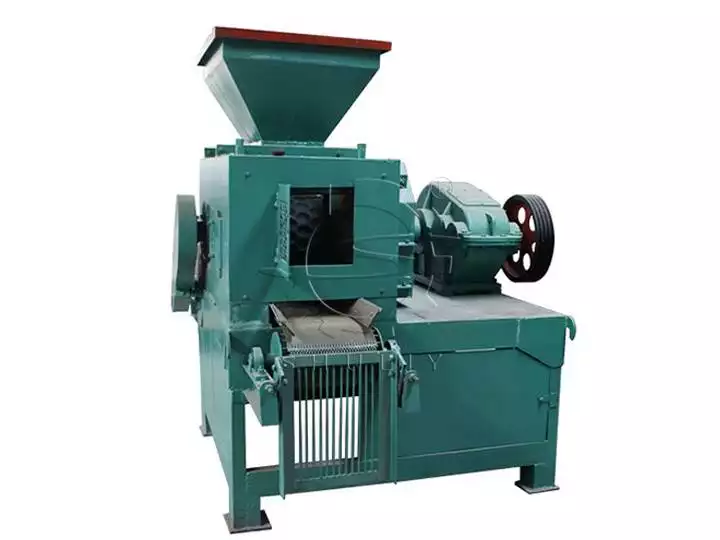
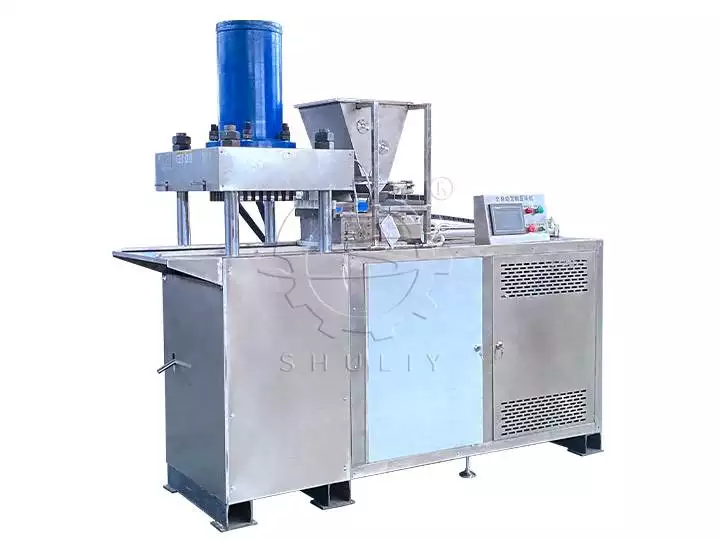
One more number worth pinning above your planning sheet: across all three designs, plan on roughly 3–4 tons of dry raw material for every 1 ton of charcoal you sell. Carbonization yield — not machine price — is the cost line most beginners misjudge. If the furnaces will feed a full linha de produção de carvão de serragem, size the kiln against your daily drying and pressing capacity, never against the brochure.
Delivered Projects: How Real Buyers Chose
- Nepal — hoist furnace, 2 t/day: a small mill chose two-batch vertical kilns over a continuous line because forest offcuts arrive as full-length wood (project story).
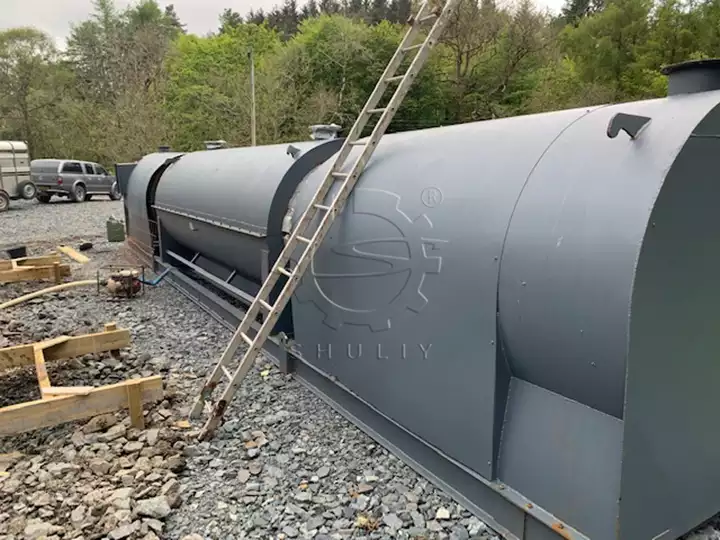
- Kosovo & Algeria — horizontal kilns: wood-charcoal producers with bulky rounds but modest daily tonnage preferred ground-level cage loading (Kosovo, Algeria).
- UK — SL-1200 continuous furnace: installed and commissioned on site for high-throughput husk and shell feedstock (installation report).
- Ghana & Zimbabwe — continuous furnaces: rice husk and wood-charcoal operations that sell fuel in volume chose continuous carbonization (Ghana rice husk plant, Zimbabwe project).
- Brazil — coconut shell charcoal: green coconut shell waste converted to export-grade charcoal with a continuous carbonisation machine (case details).
FAQ About Choosing a Carbonization Furnace
Can a continuous carbonization furnace char whole logs?
No. Continuous furnaces accept particles and short pieces under 10 cm with moisture below 20 %. Whole logs, bamboo poles and big branches need a batch kiln — the hoist (vertical) or horizontal carbonization furnace.
How long does one carbonization cycle take?
Hoist furnaces finish a batch in 4–10 hours depending on model and charge size (300–1,000 kg). Horizontal furnaces run 12–14 hours per 900–3,000 kg charge. Once a continuous furnace is preheated, each portion of feedstock carbonizes in roughly 20–25 minutes while feeding never stops.
How much charcoal will I actually get from raw wood?
Plan on 3–4 tons of dry feedstock per ton of finished charcoal across all furnace types. Actual yield swings with species, moisture and final carbonization temperature (typically 500–800 °C).
Which furnace produces less smoke?
All three Shuliy designs route flue gas through purification: batch kilns burn their own recoverable gas above 280 °C, and continuous furnaces add water-spray dedusting plus condensing for tar and wood vinegar. For regions with strict emission inspections, the continuous furnace plus scrubbing gives you the most control.
Can I make BBQ briquettes with a continuous furnace?
Yes, in two steps: the continuous furnace chars small-size biomass, the char is ground and mixed, then pressed on a briquette machine and dried. Shisha and BBQ shapes come from the pressing stage, not the kiln.
Next Step
Send us a photo of your raw material and your target output per day — that is usually all we need to shortlist the right kiln and its feeder equipment. If you are still weighing carbonization basics first, read our overview of the processo de carbonização, or talk to a Shuliy engineer about full linha de produção de briquetes de carvão layouts.